Discovery
Four centuries on the seabed, and a decade of searching for her.
19 July 1545
She sinks in the Solent
The Mary Rose heels and floods through her open gunports during the Battle of the Solent, in sight of Henry VIII at Southsea Castle. Of a complement of around 400 men, fewer than 35 survive. She settles into the soft silt of the seabed, which begins to bury her starboard side almost at once - the reason so much of her survived.
1965
Alexander McKee starts looking
Amateur historian and diver Alexander McKee begins 'Project Solent Ships', a systematic search for historic wrecks in the Solent. The Mary Rose is one name on a list of several.
1967-68
A shape on the sonar
Professor Harold Edgerton's side-scan sonar picks up a buried anomaly in the seabed. It is the right size and the right place, but it will be several more years of diving before anyone sees timber.
5 May 1971
Three frames in the silt
Diver Percy Ackland sights three of the ship's frames protruding from the seabed. After six years of searching, the Mary Rose has been found.
Excavation
The largest underwater excavation ever attempted in British waters.
1979
The Mary Rose Trust is formed
The Mary Rose Trust is established to excavate, raise, record and preserve the ship, with Prince Charles as its president. Full excavation begins.
1979-1982
28,000 dives
Volunteer and professional divers log some 28,000 dives, recovering around 19,000 artefacts and the remains of roughly half the crew. Every object is planned in place before it is lifted - which is why so much is known about who used what, and where.
The Raising
11 October 1982.
11 October 1982
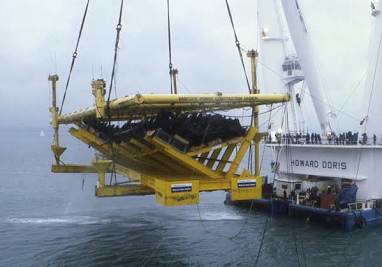
The hull breaks the surface
The hull is lifted clear of the water in a purpose-built cradle and watched live on television by an audience estimated at 60 million. She is brought ashore to Portsmouth and into the dry dock where she remains.
Conservation
Thirty-four years of spraying, and then the long dry.
1982-1994
Twelve years of cold water
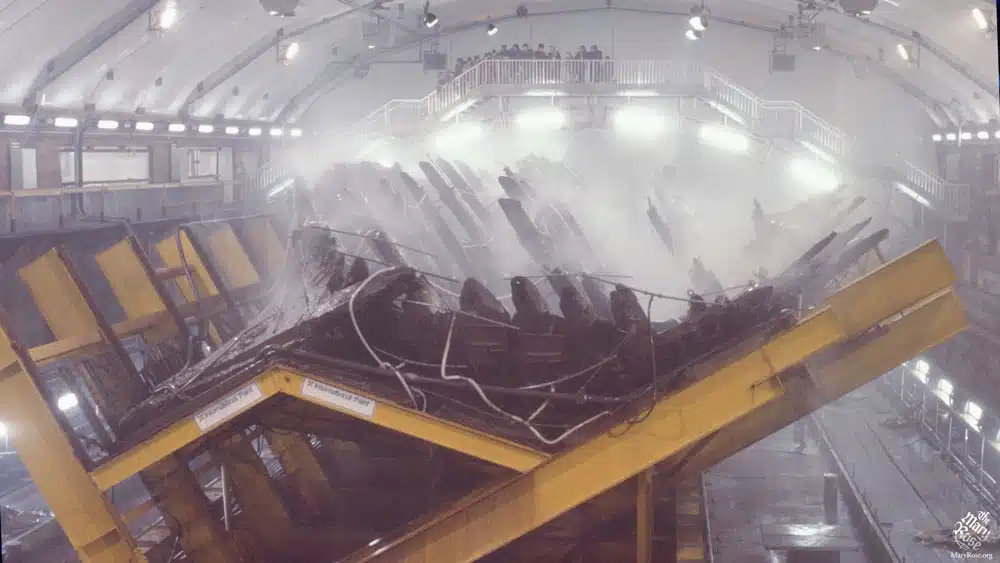
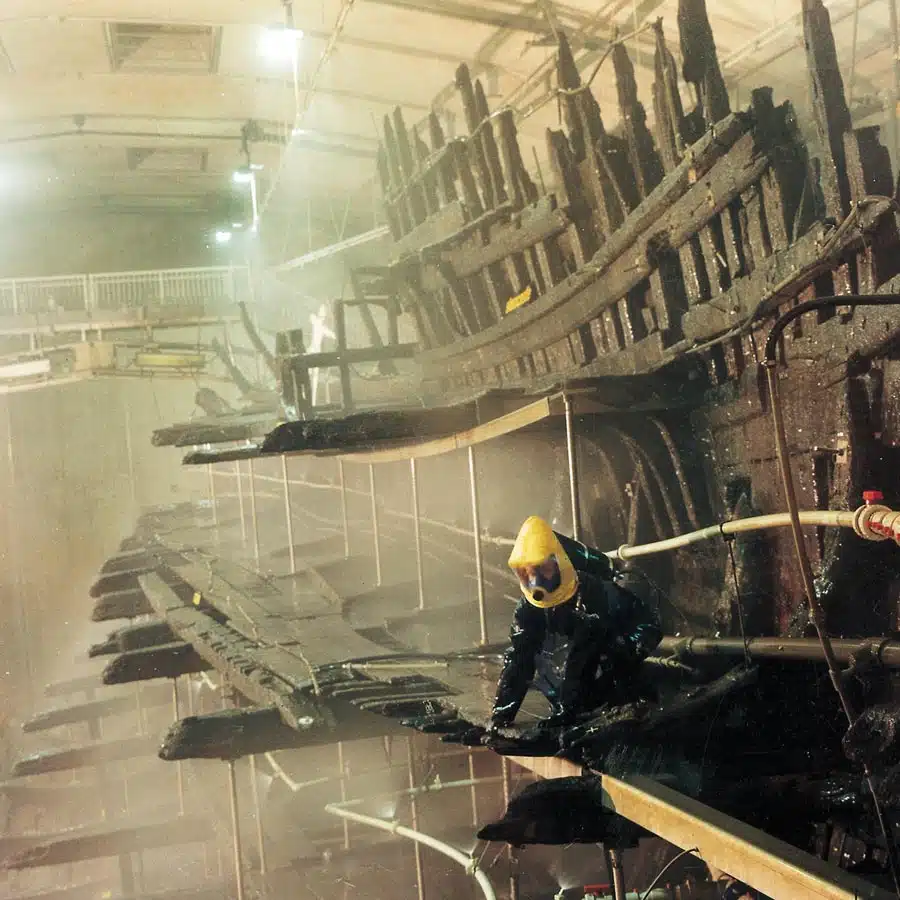
Waterlogged timber that is allowed to dry will shrink, crack and collapse. The hull is sprayed continuously with chilled fresh water - keeping the wood wet and holding back bacteria - while the conservation team works out what to treat it with.
1994-2013
Polyethylene glycol
The spray is switched to polyethylene glycol (PEG), a water-soluble wax that soaks into the timber and replaces the water in the cell walls, supporting them from within.
Two grades are used in turn: a low molecular weight PEG small enough to penetrate deep into the wood, then a higher molecular weight one to seal and support the surface.
Spraying finally stops in April 2013, after nineteen years.
2013-2016
The controlled dry
With the PEG in place the hull is dried in tightly controlled air, removing the remaining water slowly enough that the timber does not move. The process finishes in 2016.
The Museum
The ship and her crew, shown together.
31 May 2013
The new museum opens
The purpose-built Mary Rose Museum opens in Portsmouth Historic Dockyard, with the hull on one side of each gallery and the objects recovered from it displayed opposite, at the level they were found.
2016
The screens come down
With drying complete, the glass barrier separating visitors from the hull is removed and the ship can be seen directly across the open air of the dock.